

Most people who ask about an IPTV free trial vs paid subscription are really asking one thing: does paying actually change anything, or is it the same stream with a price tag on it. The honest answer, after years of running and supporting reseller panels, is that the gap is bigger than most buyers expect, and it shows up in places nobody warns you about, like server priority during peak hours and how fast a dead line gets replaced. This article breaks down the real operational differences, not the marketing ones, for both everyday subscribers and resellers deciding how to structure their offers.
Why a Free Trial Almost Never Shows the Real Service
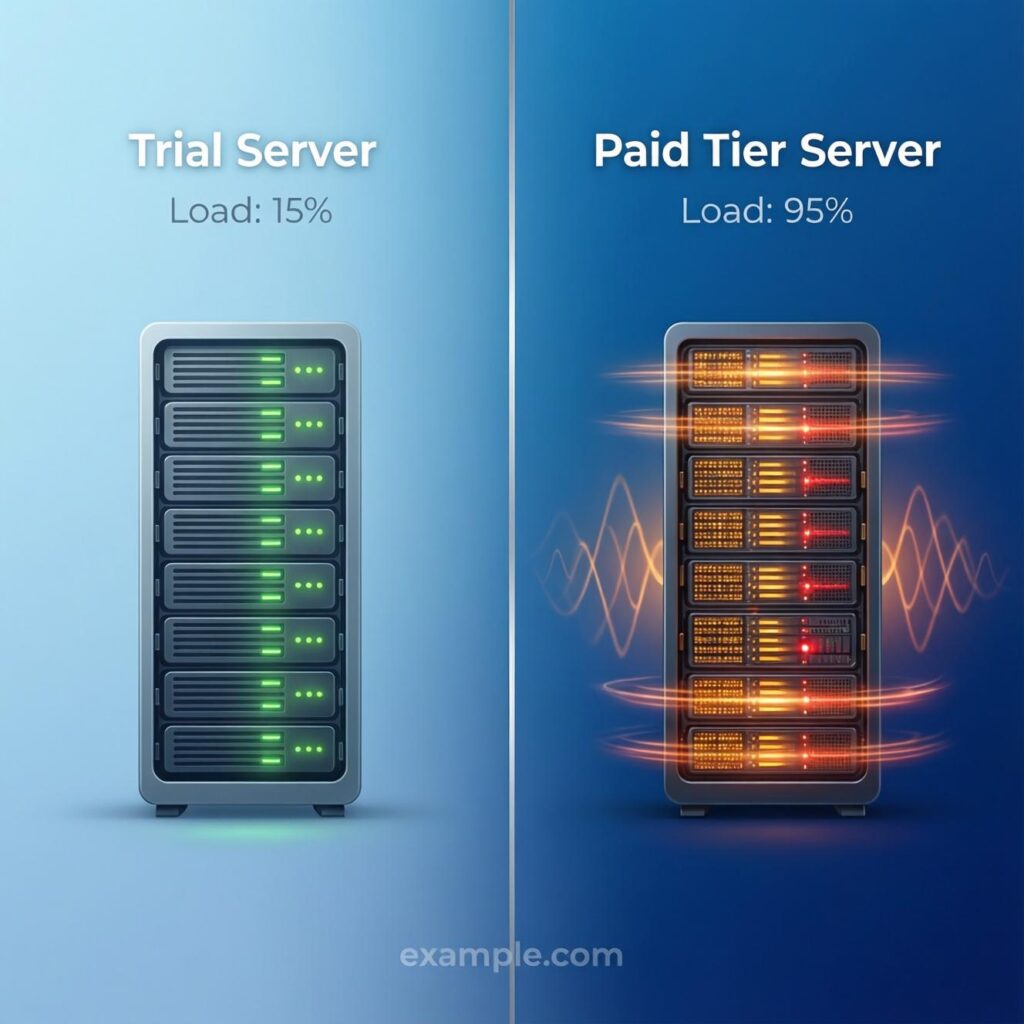
A free trial is built to convert, not to represent day-to-day performance. Trial accounts are frequently placed on shared, lower-priority server pools because providers have no incentive to burn premium bandwidth on someone who hasn’t paid yet. This is the core issue in any IPTV free trial vs paid subscription comparison: the trial period is a controlled environment, while the paid tier is where real load, real churn, and real infrastructure decisions happen.
During a trial, concurrent connection limits are usually loose because so few trial users are online at once. Once that same person becomes a paying subscriber sitting on a panel with hundreds of other active households, the picture changes. Buffering during high-demand hours, EPG data that lags behind, and reconnection delays after a channel switch are far more common on oversold paid tiers than they are during a two-hour trial window, which is exactly why trials rarely predict long-term reliability.
Pro Tip: If you’re evaluating a provider, ask what server pool trial accounts sit on. If the answer is vague, assume it’s a separate, lighter-loaded pool from paid traffic — the trial is not a preview of peak-hour performance.
IPTV Free Trial vs Paid Subscription: What Actually Changes on the Backend
The visible difference is usually stream quality. The invisible difference is infrastructure allocation. Paid subscriptions typically move a customer onto panel credits tied to a specific reseller or sub-reseller hierarchy, which determines which CDN nodes and backup uplink servers that connection routes through. Free trials almost never get backup routing, because backup capacity costs money and providers reserve it for revenue-generating lines.
This matters most during ISP-level disruptions. Deep packet inspection and DNS poisoning attempts have become more targeted in 2026, and providers with genuine backup uplink infrastructure can reroute paid traffic within minutes. Trial accounts, sitting outside that redundancy layer, are usually the first to drop and the last to be restored, since there’s no retention incentive to prioritize them.
- Paid accounts: dedicated panel credit allocation, backup server failover, EPG refresh priority
- Free trials: shared low-priority pool, no failover guarantee, EPG often static or delayed
- Sub-reseller managed accounts: sit between the two, quality depends entirely on the sub-reseller’s own panel credit management
Hidden Costs Buyers Don’t Account For
The free trial vs paid subscription debate usually ignores the cost side entirely, but this is where a lot of buyer regret comes from. A trial costs nothing because it’s designed to be disposable. A paid subscription carries an implicit cost beyond the monthly fee: the time spent troubleshooting a provider that turns out to be unstable once real load hits their servers.
Switching providers after committing to a paid plan means re-setting up devices, re-entering credentials on Firestick, Android TV, or Smart TV apps, and often losing whatever discount was tied to a longer commitment. This is why serious buyers treat the trial period as a stress test rather than a demo. Testing during peak evening hours, checking channel reconnection speed, and confirming EPG accuracy during the trial window catches problems before money changes hands, even though the trial infrastructure itself is lighter-loaded than what a paid tier will experience.
Pro Tip: Run your trial test during the exact hours you’ll actually watch, not during off-peak afternoons. A trial that looks flawless at 2pm can look completely different at 8pm when paid subscriber load peaks.
IPTV Free Trial vs Paid Subscription for Resellers: A Different Calculation Entirely
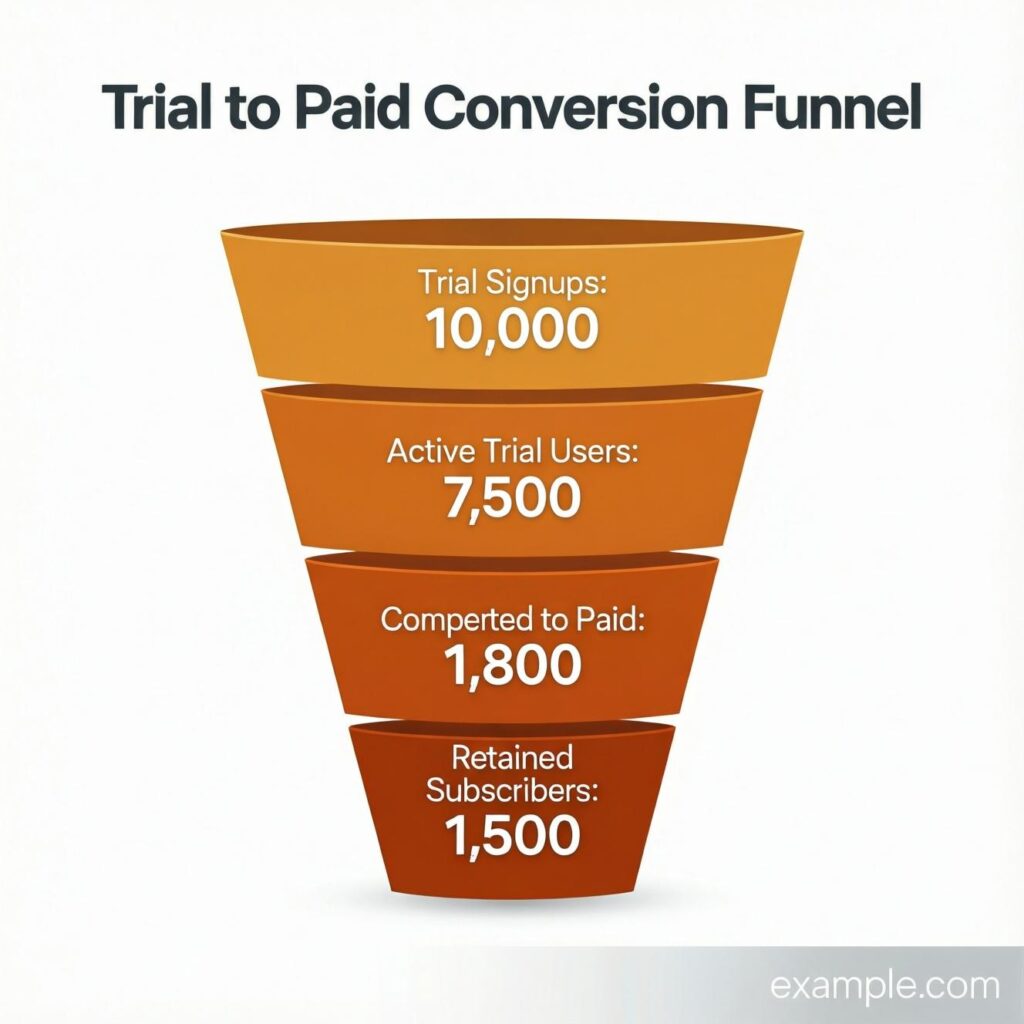
For resellers and sub-resellers, this comparison isn’t about personal viewing quality, it’s about churn psychology and margin. Offering free trials to prospective customers is standard practice, but the trial-to-paid conversion rate depends heavily on whether the trial experience is close enough to the paid experience to build trust without giving away the full value of the product.
Resellers who run trials on the same server pool as paid customers often see higher conversion, because the customer isn’t disappointed by a downgrade after paying. Resellers who run trials on cheap, oversold test panels frequently see the opposite: strong sign-ups during the trial, followed by cancellations within the first week of the paid period once the customer notices reduced priority elsewhere. Panel management here is the deciding factor, not marketing copy.
| Factor | Free Trial Setup | Paid Subscription Setup |
|---|---|---|
| Server priority | Shared, low priority | Dedicated panel credit allocation |
| Backup uplink | Rarely included | Standard on quality panels |
| EPG refresh | Delayed or static | Real-time, prioritized |
| Reseller churn signal | Not measurable yet | Directly tied to renewal rate |
Why Scaling Changes the Comparison Again
As a reseller’s customer base grows, the operational gap between trial accounts and paid accounts widens further. A sub-reseller managing fifty active households cannot run all of them, plus a rotating pool of trial users, on the same infrastructure without one group degrading the other. This is where load balancing decisions get made, and it’s also where inexperienced resellers lose paying customers by accidentally treating trial traffic and paid traffic as equal priority.
The providers who hold onto customers long-term are the ones who separate trial infrastructure from paid infrastructure entirely, so a spike in trial sign-ups never touches paid subscriber stability. This is a basic but frequently ignored principle of running IPTV services at scale, and it’s the single biggest technical difference between operators who retain customers and operators who bleed them.
ISP Blocking Trends and What They Mean for Trial vs Paid Reliability
2026 has brought more aggressive ISP-level interference, with deep packet inspection flagging IPTV traffic patterns faster than in previous years. This changes the free trial vs paid subscription equation because paid subscriptions on well-managed panels typically have access to multiple backup uplink servers and rotating connection methods, while trial accounts are rarely given access to that same failover system.
A subscriber testing a free trial during a period without active ISP interference may see a flawless stream, only to discover after paying that the paid tier is more frequently targeted simply because it carries more consistent, identifiable traffic volume. This isn’t a flaw specific to any one provider, it’s a structural reality of how ISP monitoring systems flag sustained streaming patterns versus short trial sessions.
Pro Tip: Ask any provider directly how many backup uplink servers exist for your region before committing to paid. A provider with one route and no failover will struggle the moment ISP-level blocking increases, regardless of how smooth your trial looked.
Frequently Asked Questions
Is an IPTV free trial an accurate representation of paid service quality?
Not fully. Trials usually run on lighter-loaded server pools with fewer concurrent users, so peak-hour performance on a paid subscription can differ noticeably from what the trial showed, especially during high-demand evening hours.
How long should a free trial be to properly evaluate a provider?
A minimum of 24 to 48 hours covering both peak and off-peak hours gives a much clearer picture than a short daytime test, since load-related issues like buffering and reconnection delays typically only appear during high-traffic windows.
Can resellers offer free trials without hurting paid customer performance?
Yes, but only by separating trial traffic from paid traffic on different server allocations. Resellers who mix the two often see paid subscribers experience slowdowns whenever trial sign-ups spike.
What’s the biggest difference between free trial vs paid subscription reliability?
Backup uplink access. Paid subscriptions on properly managed panels typically have failover routing during outages or ISP interference, while trial accounts are rarely included in that redundancy layer.
Does EPG data work the same on a free trial as on a paid subscription?
Usually not. EPG refresh is often deprioritized on trial accounts, meaning program guides can appear delayed or incomplete compared to the real-time updates paid subscribers typically receive.
Is it normal for a paid subscription to buffer more than the trial did?
It can happen if the paid tier is on an oversold panel, since paid subscriber volume is generally higher and more consistent than trial traffic, making load-related buffering more noticeable after conversion.
Should sub-resellers test their own panel before offering trials to customers?
Yes. Testing during peak hours from the sub-reseller’s own panel credit allocation reveals exactly what a converting customer will experience, which prevents the trap of promising stability the panel can’t actually deliver at scale.
Are households better off skipping the trial and going straight to a paid plan?
Not usually. The trial still reveals interface quality, channel range, and basic reliability. The key is testing it at the right hours and asking direct questions about server pool separation before committing to payment.
Success Checklist
For Subscribers
- Test the trial during peak evening hours, not off-peak afternoons
- Ask whether trial and paid accounts share the same server pool
- Check EPG accuracy before committing to a paid plan
- Confirm device compatibility across all your screens before paying
For Resellers
- Separate trial infrastructure from paid infrastructure wherever possible
- Track trial-to-paid conversion against server pool assignment
- Monitor churn in the first two weeks post-conversion, it’s the clearest quality signal
- Review IPTV services regularly for panel credit allocation and backup uplink coverage
For Sub-Resellers
- Never oversell trial slots on a panel already near paid capacity
- Test your own panel at peak hours before promoting trials to customers
- Understand how the IPTV reseller panel works before setting trial policies
- Keep a direct line to your upstream provider for backup routing issues