
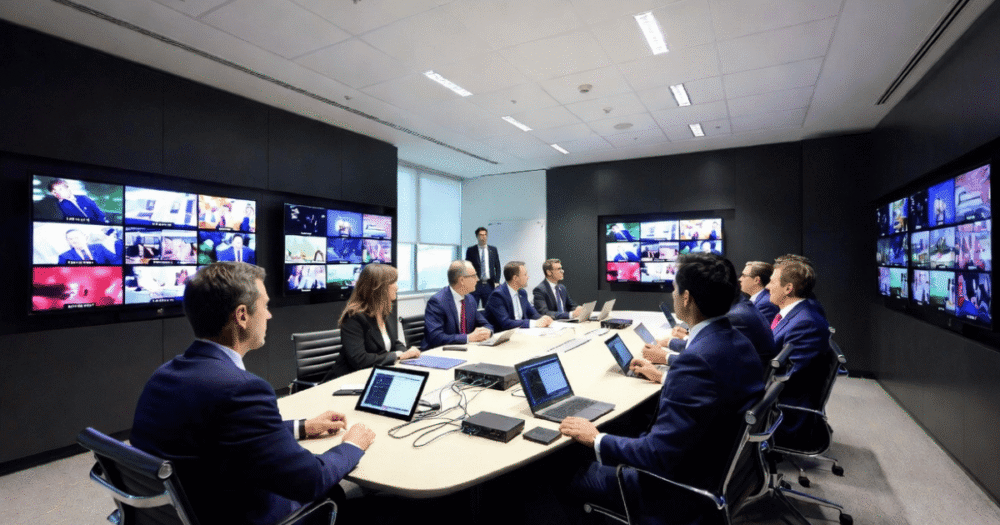
IPTV for Business and Commercial Use Is Not a Bigger Version of Home TV
Walk into any hotel lobby, gym, or sports bar operating in 2026 and you are almost certainly looking at an IPTV system — not a cable box. The hardware is gone. The coaxial runs are gone. The per-room decoder costs are gone. What replaced them is a managed network delivering content over existing internet infrastructure, controlled from a single dashboard.
That shift is not cosmetic. It is structural. And it creates a category of deployment that operates under entirely different rules from a residential subscription.
IPTV for business and commercial use involves three layers that residential setups never touch: commercial licensing compliance, enterprise-grade infrastructure, and a support model that accounts for public-facing downtime. Operators who treat a commercial deployment like a scaled-up home setup expose themselves to legal risk, technical failure, and client loss — usually in that order.
This guide covers the real operational picture: what commercial IPTV actually requires at each layer, where resellers consistently get it wrong, and what the enforcement landscape looks like for venues deploying at scale in 2026.
The Licensing Gap That Is Costing Commercial Operators Serious Money
This is the most misunderstood area in commercial IPTV, and the most expensive mistake to make.
A standard residential IPTV subscription is licensed for a single household. The moment that stream appears on a screen in a public-facing environment — a bar, a hotel room, a gym floor, a waiting room — the licensing terms are breached. Full stop. The subscription tier does not matter. The channel count does not matter. The venue size does not matter.
Commercial IPTV licensing exists as a separate product category for exactly this reason. It accounts for concurrent stream count, commercial audience size, and the nature of the viewing environment.
For venue operators and the resellers supplying them, the correct approach requires:
- Engaging a provider who explicitly supports commercial environments in their subscription terms
- Confirming the license covers your maximum concurrent stream count, not just your average usage
- Understanding that background music licensing and video content licensing are governed by separate frameworks and cannot be combined
- Ensuring any premium sports content shown publicly is covered under a separate commercial sports rights agreement — this is a distinct legal requirement from your IPTV subscription
Pro Tip: Many venues run residential credentials on commercial screens for months before receiving a formal notice. The resulting fine consistently exceeds what a compliant commercial subscription would have cost over the entire period. If your provider cannot supply written confirmation of commercial coverage, that coverage does not exist.
Operators building compliant foundations from the start should explore dedicated IPTV services structured around commercial deployment rather than retrofitting residential subscriptions.
Infrastructure Requirements for IPTV for Business at Multi-Screen Scale
Deploying IPTV across five screens in a restaurant is a different technical problem from deploying across 150 hotel rooms or across multiple locations under one management group. The infrastructure layer either supports growth or becomes the ceiling that prevents it.
Bandwidth is the first hard constraint. A single HD stream requires 8 to 10 Mbps of dedicated bandwidth. A 4K stream pushes that to 25 to 35 Mbps. Multiply by your maximum concurrent screen count, add 20 percent for network overhead, and you have your minimum bandwidth floor. The majority of commercial IPTV failures trace back to an underpowered connection, not a faulty service.
| Infrastructure Element | Minimum Requirement | Recommended for Scale |
|---|---|---|
| Internet Connection | 100 Mbps fibre | 500 Mbps dedicated leased line |
| Router | Basic VLAN support | Enterprise-grade with QoS prioritization |
| Network Switch | Unmanaged | Managed with IGMP snooping enabled |
| Backup Connection | None | 4G/5G failover active at all times |
| Server Redundancy | Single server | Multi-server with sub-3-second auto-failover |
The second layer is internal network architecture. IPTV traffic must be separated from general business internet traffic using VLAN segmentation. Without this, a single staff member downloading a large file can cause buffering across every screen in the venue during a live event. That is an unacceptable outcome at commercial scale, and it is entirely preventable with basic network configuration.
Multi-server failover is not optional in commercial environments. When server A drops during a live match, server B needs to activate before the first customer at the bar looks up from their pint.
How IPTV Reseller Panel Management Changes for Commercial Clients
If you are an IPTV reseller supplying commercial venues rather than individual households, your panel management approach needs to reflect the difference in demand, complexity, and support tolerance.
Residential users will tolerate a 20-minute outage. A venue full of customers during a live sporting event will not. That gap in tolerance is precisely where commercial accounts are won or lost permanently.
Understanding how the IPTV reseller panel works at a mechanical level is not optional before taking on commercial clients. The credit system, the connection limit architecture, and the renewal infrastructure all behave differently under commercial load, and resellers who have not studied these mechanics get caught out at the worst possible moments.
Operational adjustments that protect commercial accounts within your panel:
- Set connection limits materially higher than the advertised screen count — account for device testing, manager access, and simultaneous stream peaks
- Use dedicated line groups for commercial clients, fully separated from your residential subscriber base
- Schedule renewal reminders 14 days out, not the standard 3 to 5 days — venue managers do not respond well to last-minute pressure
- Prioritize commercial accounts for server migration during load balancing events — residential users absorb brief disruption far better
Pro Tip: If your panel provider supports sub-panel creation, build a dedicated sub-panel exclusively for commercial accounts. Cleaner reporting, faster incident response, and complete operational separation from your residential base. If a commercial incident escalates, it stays contained.
AI-Driven ISP Blocking in 2026 and What It Means for Commercial IPTV
The enforcement landscape for IPTV for business and commercial use has changed fundamentally since 2023. Major rights holders have moved beyond static IP blocking lists. In 2026, AI-assisted deep packet inspection systems identify IPTV traffic patterns in real time — including over encrypted connections — and flag them for ISP-level intervention before any infrastructure response is possible.
Commercial venues face a specific risk that residential users rarely encounter. Most operate on static IP addresses — fixed, identifiable endpoints that enforcement targeting systems can lock onto with precision. Once a static commercial IP is flagged at ISP level, the blocking is often applied before the venue or their reseller even receives an alert.
Defences that experienced commercial operators are building into deployments in 2026:
- DNS over HTTPS routing configured at router level to prevent DNS poisoning attacks that redirect IPTV traffic to null routes
- HLS latency buffering at the player level to absorb micro-interruptions during active enforcement events without customer-visible disruption
- Backup uplink servers pre-configured and tested, ready to activate in under 90 seconds — not reactive failover only
- Rotating DNS configurations on commercial-grade routers that automatically switch resolution paths when blocking events are detected
The resellers dominating the commercial space in 2026 are not fighting enforcement reactively. They are building infrastructure that absorbs enforcement attempts and continues delivering without the client ever knowing there was a problem.
Pricing Models for Commercial IPTV Contracts That Actually Retain Clients
Commercial IPTV pricing is not a subscription fee with a larger number attached. The model you choose directly determines client retention, payment reliability, and your own cash flow as a reseller. Getting this wrong is one of the primary causes of commercial account churn — and it is entirely avoidable.
Three pricing structures that generate stable commercial revenue in practice:
Annual contracts with quarterly billing. Locks the client into a 12-month commitment — which protects against seasonal cancellations and impulsive switching — while quarterly billing improves cash flow compared to full upfront payment. Most hospitality operators are comfortable with quarterly commercial commitments.
Per-screen pricing with volume tiers. A venue with 5 screens pays a different per-screen rate than one with 50. This model scales naturally with client growth and creates automatic upsell triggers as venues expand without requiring a separate sales conversation.
Location-based enterprise agreements. For multi-site operators — hotel groups, gym chains, restaurant franchises — a single master agreement covering all locations is significantly easier to manage and dramatically harder to cancel. One relationship, one invoice, one renewal conversation.
Pro Tip: Never quote IPTV for business on a monthly rolling basis. Monthly contracts invite monthly cancellation decisions. The moment a commercial client is on a quarterly or annual cycle with a proper onboarding experience, churn on that account drops by roughly 70 percent. Price the contract length into your initial conversation, not as an afterthought.
Resellers benchmarking commercial pricing against current credit costs and market rates should review the panel credit structures at BritishSeller’s IPTV reseller panel as a reference point for competitive positioning in the UK market.
Why Commercial IPTV Clients Churn and the Psychology Behind It
Commercial clients cancel for three reasons almost every time. A single buffering incident during a high-profile live event. A competitor undercutting on price at renewal. A change in venue management where the incoming manager was never sold on your service.
None of these are purely technical problems. All three have a relationship and psychology component that operationally focused resellers consistently underestimate — and consistently pay for in lost accounts.
The buffering incident is the most dangerous trigger. One bad experience during a major live event carries more negative weight than twelve months of clean delivery. The way you handle that incident — how fast you respond, how clearly you communicate, how quickly you resolve — determines whether the account renews or goes to a competitor.
Practices that protect commercial accounts through relationship management:
- Conduct a proactive call 48 hours before every major live event your commercial client is expecting to screen
- Have a tested backup stream configuration ready to activate within 90 seconds of any incident
- Send a post-incident summary within 24 hours — even for minor disruptions. Transparency builds more trust than silence
- Identify any new venue manager within 30 days of a management change and personally re-onboard them
The competitor undercutting trigger is not a pricing problem — it is a value perception problem. If a client is considering switching to save £20 per month, it means they have forgotten what your service provides beyond the stream. Regular value reinforcement through uptime reports, event support logs, and usage statistics makes the switching cost feel real rather than abstract.
Resellers who want to explore the full IPTV services for business available for commercial accounts can review current offerings built specifically for venue-scale deployments.
Frequently Asked Questions
What makes IPTV for business and commercial use different from a residential subscription?
Commercial IPTV operates under a different licensing framework, requires enterprise-grade infrastructure, and demands a support model built around public-facing downtime. A residential subscription is licensed for a single household — displaying it on screens in a public venue breaches those terms immediately, regardless of venue size. Commercial licenses account for concurrent stream count, audience type, and the commercial nature of the environment.
Is IPTV for business legal in the UK for venues like pubs and hotels?
Commercially licensed IPTV is legal for business use when the provider explicitly supports commercial environments and the subscription covers the required concurrent streams. The legal risk arises when venues run residential subscriptions on public-facing screens. Premium sports content shown publicly also requires a separate commercial sports rights license, which is a distinct legal requirement from the IPTV subscription itself.
How much bandwidth does a commercial IPTV deployment actually need?
Each HD stream requires 8 to 10 Mbps of dedicated bandwidth. Each 4K stream requires 25 to 35 Mbps. To calculate your requirement: multiply your maximum concurrent screen count by the stream quality bandwidth, then add 20 percent for network overhead. A venue running 20 HD screens simultaneously needs a minimum of 200 Mbps available dedicated to IPTV traffic alone.
Can a reseller manage commercial and residential clients on the same panel?
Technically yes, but operationally it creates significant risk. Commercial accounts generate higher support demand, require faster incident response, and have lower tolerance for downtime. Mixing them with residential accounts on the same line group means a residential load spike can affect commercial stream quality. Dedicated line groups or separate sub-panels for commercial accounts are the correct approach.
Why do commercial venues on static IPs face higher IPTV blocking risk in 2026?
AI-driven ISP enforcement systems in 2026 can identify and flag IPTV traffic patterns in real time. Static IP addresses — which most commercial venues use — are fixed, identifiable endpoints that enforcement targeting can lock onto with precision. Once flagged at ISP level, blocking is applied before any infrastructure-side response is possible. Dynamic IP rotation and DNS over HTTPS routing at router level are the primary defences.
What is the best contract length to offer commercial IPTV clients?
Annual contracts with quarterly billing offer the strongest balance between client commitment and cash flow stability. Monthly rolling contracts invite monthly cancellation decisions and should be avoided entirely for commercial accounts. Quarterly billing on an annual contract reduces churn by approximately 70 percent compared to monthly billing, while being more acceptable to venue operators than full annual upfront payment.
How should a reseller handle an IPTV outage during a live event at a commercial venue?
Activate your tested backup stream configuration immediately — this should be ready in under 90 seconds, not reactive. Communicate with the venue within the first five minutes of the incident, even if resolution is still in progress. Send a written post-incident summary within 24 hours. Speed of response and communication quality during a live event incident determines whether the account renews, far more than the incident itself.
What IPTV infrastructure element do most commercial deployments get wrong?
VLAN segmentation is the most consistently overlooked element in commercial IPTV deployments. Without separating IPTV traffic from general business internet traffic on the internal network, a single employee downloading a large file can cause buffering across every screen in the venue simultaneously. This is entirely preventable with basic managed switch configuration and costs nothing beyond the hardware already in place.
Commercial IPTV Success Checklist for Resellers
- Confirm your provider explicitly licenses commercial environments in writing — verbal confirmation is not sufficient
- Calculate bandwidth requirements before any commercial installation: concurrent screens multiplied by stream quality Mbps, plus 20 percent overhead
- Configure VLAN segmentation on every commercial site to isolate IPTV traffic from general business network usage
- Enable IGMP snooping on all managed switches at commercial locations to prevent multicast traffic flooding
- Set up and test backup uplink server activation before the account goes live — not after the first incident
- Separate all commercial accounts onto dedicated line groups within your reseller panel, isolated from residential subscribers
- Enable DNS over HTTPS routing at router level on every commercial installation
- Set renewal reminders 14 days in advance for all commercial accounts without exception
- Conduct a proactive check-in call 48 hours before every major live event your commercial clients are hosting
- Build and deliver post-incident summaries within 24 hours of any disruption, regardless of severity
- Review per-screen pricing against current panel credit costs every six months to maintain competitive margins
- Re-onboard any new venue manager personally within 30 days of a management change — never assume continuity of relationship